Skip to content
Independent bookkeeping & advisory firm · Serving U.S. businesses remotely Find a ProAdvisor
TechBrot

Ohio · The Buckeye State · All 88 Counties

QuickBooks ProAdvisor-led bookkeeping for Ohio businesses.

Professional bookkeeping, QuickBooks setup and cleanup, payroll, and tax compliance — delivered directly by TechBrot, serving Ohio businesses remotely. Real local tax fluency, founder review on every engagement, and a fixed-fee written scope before any work begins.

Bookkeeping & advisory · All 88 Ohio counties · remote-first · Written fixed-fee scope in 3 business days

How Ohio books tie outledger view
Cash Mar · reconciled · illustrative
DEBIT CREDIT OpeningDepositsVendor billsClosing 6,630.0024,900.0023,280.008,250.00 31,530.00 31,530.00

Certifications

Current certifications held by TechBrot’s founder, who reviews every engagement: QuickBooks Online Level 2 and QuickBooks Payroll — verification on request. Intuit’s ProAdvisor program becomes ProPartner Accountants in early 2027; the certifications continue.

  • QuickBooks Online Level 2 certification badge (exam-based, issued by Intuit)
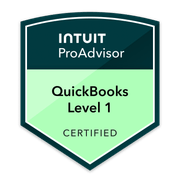
  • QuickBooks Online Level 1 certification badge (exam-based, issued by Intuit)
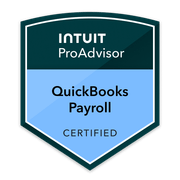
  • QuickBooks Payroll certification badge (exam-based, issued by Intuit)
§Ohio at a glance

The state by the numbers.

A short read on the operational profile that shapes how accounting is done in Ohio — from the Columbus insurance-and-tech corridor and the Cleveland Clinic to Cincinnati consumer goods and the manufacturing and logistics base across the state.

649 + 199
Municipalities and school districts levying an income tax — withheld by work location, with the 20-day rule and RITA/CCA collection
$0
Ohio corporate income tax — there isn’t one; the Commercial Activity Tax (CAT), a gross-receipts tax, applies instead
$6M
Commercial Activity Tax exclusion for 2026 — under $6M in Ohio gross receipts owes no CAT; 0.26% applies above it
$26,050
Ohio state income exempt from tax — above it the rate is low and on a legislated path to zero by 2030
6.5–8.0%
Combined sales-tax range by county — 5.75% state plus a county and transit rate, highest in Cuyahoga and Franklin
IN/PA/MI/KY/WV
Reciprocity — residents of these states are exempt from Ohio state withholding (the Ohio municipal tax still applies)
§In brief

TechBrot in Ohio, in brief.

TechBrot delivers QuickBooks ProAdvisor services, Ohio bookkeeping, QuickBooks setup, cleanup, payroll, and sales-tax tracking to Ohio businesses across all 88 counties — from the Columbus, Cleveland, and Cincinnati “3-C” corridor to Toledo, Akron, Dayton, Canton, and Youngstown. TechBrot is registered in Delaware and serves every state remotely. The full Ohio summary is below.

Ohio figures verified against the Ohio Department of Taxation.

§ProAdvisor certifications

Certified QuickBooks ProAdvisor credentials

Active certifications: QuickBooks Online Level 2 · Payroll. Intuit’s public ProAdvisor directory lists active ProAdvisors for verification.
Online (L2) QuickBooks Online ProAdvisor (Level 2)Payroll QuickBooks Payroll ProAdvisor

5.0

on Clutch · 2 verified reviews

2×

QuickBooks ProAdvisor certifications — Online (L2) and Payroll

88

Ohio counties served — the 3-C corridor to the Mahoning Valley

TechBrot in Ohio, summarized.

TechBrot delivers QuickBooks ProAdvisor services, Ohio bookkeeping, QuickBooks setup, cleanup, payroll, and sales-tax tracking to Ohio businesses across all 88 counties — from the Columbus, Cleveland, and Cincinnati “3-C” corridor to Toledo, Akron, Dayton, Canton, and Youngstown. Ohio’s state income tax is low and shrinking — the first $26,050 is exempt and the rate is on a legislated path to zero by 2030 — but the operational work lives elsewhere. Ohio has no corporate income tax; instead, businesses with Ohio gross receipts over $6 million owe the Commercial Activity Tax (CAT) at 0.26%, and smaller businesses are exempt. The real complexity is the municipal income tax: 649 cities and 199 school districts levy income taxes, withheld by work location, with the 20-day occasional-entrant rule and collection split among RITA, CCA, and self-administered cities that read the rules differently. Sales tax is 5.75% state plus a county rate (combined 6.5% to 8.0%, depending on the county), and Ohio has reciprocity with Indiana, Pennsylvania, Michigan, Kentucky, and West Virginia for state tax (the municipal tax still applies). Engagements run as fixed-fee monthly retainers or one-time scopes with written agreements before any work begins. Honest scope: we do not file Ohio returns, the CAT, the municipal or school-district tax, or the sales-tax return — we keep the books and coordinate with your CPA, RITA/CCA, and the city.
§Quick answers

TechBrot in Ohio, in five questions.

How does an Ohio engagement start, and what does it cost?

A free 30-minute discovery call, then a written fixed-fee scope within 3 business days. The published ranges for every service are on the pricing page; the written scope sets your exact fee within them, and nothing outside it is billed without a re-quote you approve in writing. No hourly billing.

What changes in QuickBooks when an Ohio business sells in several states?

Once an Ohio business sells into other states, QuickBooks needs a nexus and taxability setup it did not need before: customer locations, product taxability by state, and a separate liability account for each state you owe. We configure that in your own file and keep the reconciled schedules your tax professional files from — we do not file sales-tax returns.

How does TechBrot handle Ohio payroll records in QuickBooks?

Ohio payroll in QuickBooks means state withholding and unemployment accounts reconciled to the filed forms every period — plus any other state where an employee works. We keep those liability accounts tied out and the schedules ready for whoever files; we do not file payroll returns.

What does TechBrot do when an Ohio business moves from QuickBooks Desktop to Online?

We plan the migration, move the file, and prove the balances match — opening balances, open invoices and bills, payroll and sales-tax liabilities reconciled between the two systems before Desktop is retired. Ohio sales-tax and payroll settings are rebuilt in Online rather than assumed to carry over.

What happens after I send my QuickBooks file?

A free file review first: we read the balance sheet, the reconciliation status of every account and the age of the uncategorised items, then tell you plainly whether cleanup, catch-up or monthly bookkeeping fits. If it fits, you get a written fixed-fee scope within 3 business days. Nothing starts until you accept it.

§Ohio accounting glossary

The Ohio terms that matter for QuickBooks & bookkeeping.

Short, specific, definitional. These are the terms that come up in nearly every Ohio engagement — and the ones Ohio owners ask about most.

Municipal Income Tax

Ohio’s defining local tax: 649 cities and villages levy an income tax, generally withheld by the employer for the municipality where the work is performed (rates about 1%–3%). It is the most complex local income-tax regime in the U.S., and configuring QuickBooks Payroll for work-location withholding per employee is the core Ohio engagement. Confirm rates with RITA or the city. Ohio payroll setup →

The 20-Day Rule

The occasional-entrant rule: an employer need not withhold municipal income tax for a city where an employee works 20 or fewer days in the year — but after 20 days, withholding begins (with exceptions for the principal place of work, long construction sites, and athletes/entertainers). RITA and CCA interpret it differently, which is exactly why it needs operational expertise.

RITA & CCA

RITA (Regional Income Tax Agency) and CCA (Central Collection Agency) collect municipal income tax for many Ohio cities; others self-administer. Which body a city uses — and how it reads the 20-day rule — changes how you register, withhold, and file. We set QuickBooks up to the city’s actual collector.

School District Income Tax

Separately from cities, 199 Ohio school districts levy an income tax, generally residence-based (on employees who live in the district). It is a distinct withholding layer from the municipal tax, and we configure it per employee where it applies.

Commercial Activity Tax (CAT)

Ohio has no corporate income tax; instead it levies the CAT, a gross-receipts tax. For 2026 the exclusion is $6 million — under that, no CAT — with a 0.26% rate above it. Most small businesses are now exempt, but gross-receipts tracking still has to be clean. Ohio CAT →

State Income Tax Phase-Out

Ohio’s state income tax is low and being eliminated: the first $26,050 of income is exempt, the rate above it is under 3%, and House Bill 96 (2025) puts it on a path to a single low flat rate and then no tax on nonbusiness income beginning in 2030. Confirm the current-year rate with the Ohio Dept of Taxation.

Reciprocity (IN/PA/MI/KY/WV)

Ohio has reciprocal agreements with Indiana, Pennsylvania, Michigan, Kentucky, and West Virginia: a resident of those states working in Ohio is exempt from Ohio state withholding (Form IT 4NR). Crucially, the Ohio municipal income tax still applies to work performed in an Ohio city, and reciprocity does not shield a 20%+ owner under the IT 4738 PTE.

Pass-Through Entity Tax (IT 4738)

Ohio’s IT 4738 Electing Pass-Through Entity tax is a SALT-cap workaround: a qualifying entity elects to pay tax at the entity level so the owners can deduct the state tax federally. We keep the books PTE-ready; your CPA makes the election and files.

Always confirm current rates and thresholds against the Ohio Department of Taxation, and municipal rates against RITA or your city’s collector.

§Service coverage

What we deliver in Ohio.

One operating standard, delivered remotely statewide. Engagements are scoped to the work required, where you are in the state, and your industry.

01 · TechBrot delivers directly

Direct service by TechBrot.

Ohio engagements — bookkeeping, QuickBooks work, payroll, municipal withholding, and the CAT and sales-tax tracking — are delivered directly by TechBrot. Led by TechBrot’s founder, working in your own file with the firm’s full infrastructure.

  • Monthly bookkeeping & close
  • QuickBooks setup, cleanup, migration, and reconciliation
  • QuickBooks Online, Desktop, Enterprise, Payroll
  • Municipal income tax withheld by work location (RITA/CCA)
  • School-district withholding and IN/PA/MI/KY/WV reciprocity
  • CAT gross-receipts tracking and county sales-tax setup
  • Remote delivery, secure, encrypted access
Browse Ohio services →

For Ohio Department of Taxation filings, RITA/CCA municipal filings, audit representation, and tax strategy, we coordinate with your existing Ohio CPA, EA, or registered tax preparer.

§Why Ohio is different

What makes Ohio accounting different.

Ohio’s state income tax is low and shrinking — but the municipal income tax withheld by work location, the Commercial Activity Tax in place of a corporate income tax, and the county-by-county sales tax create accounting requirements generic out-of-state bookkeeping misses.

Municipal Income Tax

Work-location withholding is where Ohio payroll goes wrong.

Ohio’s state income tax is low and shrinking, so the complexity is local. 649 cities and 199 school districts levy income taxes, and the employer generally withholds the municipal tax for the city where the work is performed.

The 20-day rule, the split among RITA, CCA, and self-administered cities, and the residence-based school-district layer make generic payroll get it wrong. We configure QuickBooks Payroll per employee by work location and the collector’s rules. Ohio QuickBooks ProAdvisor →

No Corporate Income Tax — the CAT

Ohio taxes gross receipts, not corporate income.

Ohio has no corporate income tax. Instead, the Commercial Activity Tax (CAT) applies to gross receipts — but for 2026 the exclusion is $6 million, so a business under that owes no CAT, and above it the rate is 0.26%.

Most small businesses are now exempt after the reforms, but the gross-receipts figure still has to be tracked correctly to know where you stand. We keep the books CAT-ready.

County-Variable Sales Tax

5.75% state — plus a county rate that changes the total.

Ohio’s sales tax is 5.75% at the state level, plus a county and transit rate, so the combined rate runs from about 6.5% to 8.0% depending on the county (highest around Cleveland and Columbus).

Which rate applies depends on the county, so QuickBooks has to be set up to charge the right combined rate by location. Sales-tax compliance →

A Manufacturing & Logistics Core

The 3-C corridor and the Midwest crossroads.

Ohio is one of the most manufacturing-intensive states — autos, steel, polymers, aerospace — and a logistics crossroads where the interstates meet, with deep healthcare (the Cleveland Clinic) and finance (Columbus).

That mix means job costing, inventory and WIP, multi-state nexus for shippers, and — for growing pass-throughs — the IT 4738 PTE election as a planning item, handled on our national industry pages and in advisory.

Ohio operational context informs every TechBrot engagement in the state. The diagnostic call identifies which factors apply — which cities and school districts you withhold for, whether you cross the CAT threshold, and which county sales-tax rate to charge.

§What the engagement fixes

What an Ohio engagement fixes.

RITA/CCA

municipal withholding set by work city for every employee, with the 20-day positions documented
Representative · Columbus payroll cleanup

$6M

Commercial Activity Tax position measured against the exclusion and kept CAT-ready
Representative · manufacturer review

IT 4NR

reciprocity forms collected so cross-border staff were exempt from Ohio state tax
Representative · IN/PA reciprocity

6.5–8.0%

county sales-tax rates configured by location, fixing a single-rate setup
Representative · sales-tax fix

Illustrative outcomes representative of the engagement types we handle in Ohio — not specific client results or guarantees.

§Beyond bookkeeping

Automation handles the data entry. We handle the judgment.

As AI commoditizes basic bookkeeping, value moves to interpretation, structure, and advisory. Software can post a transaction; it can’t tell you that a hybrid employee just crossed the 20-day threshold in another city, whether your gross receipts are about to cross the $6 million CAT line, or whether your pass-through should make the IT 4738 election. For Ohio businesses ready for that conversation, TechBrot offers fractional CFO engagements — forecasting, board reporting, KPI design, multi-state nexus planning, and Ohio-specific tax-position work (including CAT and PTE coordination) with your CPA. By application. Best fit: Ohio manufacturers, logistics firms, and growing services businesses where the books need to inform strategy, not just compliance.

Fractional CFO (Ohio)

§Ohio industries we serve

Industry-specific accounting for Ohio’s economy.

Ohio’s economy runs on manufacturing and logistics, with deep healthcare, finance, and consumer-goods sectors across the 3-C corridor. Our engagements concentrate in the sectors that drive it — each handled on our national industry pages, configured for Ohio’s municipal-tax and CAT stack.

01

Manufacturing

Ohio is one of the most manufacturing-intensive states — autos, steel, polymers, aerospace. Job costing, standard vs. actual cost, inventory and WIP, multi-plant reporting, and CAT gross-receipts tracking against the $6M exclusion.

02

Logistics & Trucking

Ohio is the Midwest crossroads where the interstates meet. Per-lane and per-customer profitability, fleet depreciation, owner-operator 1099s, multi-state nexus, and municipal withholding for drivers across cities.

03

Healthcare & Practices

The Cleveland Clinic ecosystem and a deep hospital and practice base. Insurance-payer reconciliation, HIPAA-aware data handling, and multi-provider payroll with municipal and school-district withholding.

04

Professional & Financial Services

Columbus insurance and finance, plus agencies and consultancies statewide. Project profitability, owner compensation, the municipal-tax footprint for hybrid staff, and IT 4738 PTE planning.

05

Construction

Builders across the 3-C growth markets. Job costing, WIP, and retainage, the construction-site exception to the 20-day rule, certified payroll, and CPA-ready job profitability.

06

Real Estate

Investors, brokerages, and property managers across the metros. Entity-per-property books, owner draws, 1031 coordination, and the municipal-tax wrinkle tied to property and owner location.

Ohio industry engagements are delivered on our national industry pages, configured for Ohio’s municipal-tax and CAT stack. Don’t see your sector — e-commerce, SaaS, restaurants, nonprofits? We serve them too; ask on the discovery call.

§Services for Ohio businesses

Find the right service for your Ohio business.

Each core service has a dedicated Ohio page with fixed-fee scopes, delivery cadence, and engagement details. Everything else is covered on our national service pages, configured for Ohio.

Service 05

Ohio QuickBooks Setup

Professional QuickBooks implementation for Ohio businesses — chart of accounts for your industry, municipal withholding by work location (RITA/CCA), school-district setup, and the county sales-tax rate. National setup overview →

From $750 · One-time, 2–4 weeks

Ohio setup →

Other Ohio engagements are covered on our national service pages, configured for Ohio: Monthly Bookkeeping · Catch-Up Bookkeeping · QuickBooks Migration · Payroll (municipal/RITA/CCA) · Sales Tax Compliance (county) · Fractional CFO (CAT/PTE) · Pricing.

§Ohio pricing

Fixed-fee starting ranges for Ohio engagements.

Every Ohio engagement is quoted as a fixed fee against a written scope before any work begins — no hourly billing. Final scope and fee are delivered in writing within 3 business days of the discovery call.

Indicative fixed-fee starting ranges for Ohio QuickBooks and bookkeeping engagements.
EngagementStarting rangeCadenceOhio notes
Monthly bookkeepingFrom $400/moRecurring monthlyReconciliation, municipal-tax review, CAT tracking, county sales-tax sub-reconciliation, reporting
Cleanup / catch-upFrom $1,500One-timeScope depends on months behind, volume, and municipal/entity complexity
QuickBooks setupFrom $750One-time, 2–4 wksChart of accounts, municipal withholding by work location, county sales-tax setup
QuickBooks cleanupFrom $1,200One-timeWrong-city municipal withholding and untracked CAT receipts are common fixes
Sales tax helpFrom $250/moRecurring + nexus review5.75% state + county (6.5%–8.0% combined) · multi-state nexus
Municipal-tax (RITA/CCA) payroll setupFixed fee, scoped in writingSetup + ongoingWork-location withholding · 20-day rule · school-district layer · IN/PA/MI/KY/WV reciprocity
Payroll managementScoped on the callRecurring monthlyMunicipal income tax per employee by work location; reciprocity for cross-border staff
Fractional CFOFrom $3,000/moRecurring, by applicationOhio-aware strategic finance; CAT, PTE, and multi-state nexus planning with your CPA

Indicative starting ranges, not quotes. Final fees scale with transaction volume, employee count, the number of cities and school districts you withhold for, whether you cross the CAT threshold, your sales-tax footprint, industry specifics, and multi-state activity. TechBrot does not file Ohio returns, the CAT, the municipal or school-district tax, or the sales-tax return; it keeps the books and coordinates with your CPA. Full pricing detail →

§Cities & counties

Serving Ohio businesses statewide.

TechBrot serves Ohio businesses across all 88 counties remotely. Below are the metros we serve most often, plus a representative sample of the counties covered.

Ohio metros we serve

Columbus — Franklin County
Cleveland — Cuyahoga County
Cincinnati — Hamilton County
Toledo — Lucas County
Akron — Summit County
Dayton — Montgomery County
Canton — Stark County
Youngstown — Mahoning County

Ohio counties served — representative sample

TechBrot serves all 88 Ohio counties — Franklin (Columbus), Cuyahoga (Cleveland), and Hamilton (Cincinnati) anchoring the 3-C corridor; Lucas (Toledo), Summit (Akron), Montgomery (Dayton), Stark (Canton), and Mahoning (Youngstown) across the secondary metros; the donut and collar counties around each; and the rural counties in between. Remote, fixed-fee service reaches the whole state; each city sets its own municipal income tax (collected by RITA, CCA, or the city) and each county its own sales-tax rate, which we confirm before withholding or charging.

Don’t see your city? All 88 Ohio counties are served via remote engagement delivery. Start an Ohio conversation →

§Talk to a QuickBooks ProAdvisor

Two ways to start an Ohio engagement.

Both paths go to the same QuickBooks ProAdvisor. Pick the one that fits how you work.

Led by a Certified QuickBooks ProAdvisor — QuickBooks Online Level 2 and QuickBooks Payroll

Reconciling, cleaning, and rebuilding books across manufacturing, construction, and professional services — the work behind every Ohio engagement.

Option 01

Call directly.

If we miss you, a QuickBooks ProAdvisor returns your call within one business day. Best for behind-on-the-books situations or Ohio municipal-tax (RITA/CCA), CAT, and reciprocity questions.

Call (877) 751-5575
  • Callback within one business day
  • Free, no pitch

Send a short discovery brief.

Six fields. We respond by the next business day with a path forward — a scoping call or, if not a fit, a referral. Includes a free QuickBooks file review — we’ll identify the top 3 issues in your file before any engagement begins.

Only used to schedule the call — never for marketing.

Callback within one business day; written fixed-fee scope within 3 business days of the first call. No hourly billing.

§Why Ohio businesses choose TechBrot

What separates us from generic remote bookkeeping.

Ohio has no shortage of bookkeeping options. What TechBrot brings: actual Ohio operational depth — municipal income tax by work location (RITA/CCA and the 20-day rule), school-district withholding, the CAT, and county sales tax — real QuickBooks ProAdvisor credentials, and a structurally accountable engagement model.

01

Ohio operational depth

Municipal income tax by work location (RITA/CCA and the 20-day rule), school-district withholding, the CAT in place of a corporate income tax, and county sales tax. Operational specifics, not generic remote support.
02

Bookkeeping & advisory

Current QuickBooks certifications in QuickBooks Online L2 and Payroll. Intuit’s public ProAdvisor directory lists active ProAdvisors for verification.
03

Fixed-fee, written scope

Every engagement starts with a written scope and a fixed fee before any work begins. No hourly billing. No surprise invoices. No scope creep — even for multi-city, RITA/CCA-heavy Ohio engagements.
04

Honest, independent delivery

We keep the books and coordinate with your CPA, who files — just the right scope for your Ohio business. Bookkeeper vs accountant →

Automation handles the data entry. We handle the judgment — and the Ohio details, like municipal income tax by work location and the 20-day rule, that automation misses.

§What clients say

Verified client reviews.

Independently collected and verified on Clutch — real engagements, unedited. 5.0 overall from 2 verified reviews. See all reviews on Clutch →

“They took something that felt overwhelming to me as a first-year business owner and made it simple.”

Reviewed and corrected QuickBooks records — reconciling transactions and organizing the chart of accounts. Books went from disorganized to fully reconciled, delivered on time, with a responsive, nonjudgmental approach.

“What stood out the most was TechBrot Inc’s attention to detail.”

Credit card reconciliation and financial cleanup — reviewing transaction categorization and improving bookkeeping structure. Significantly improved reporting accuracy and performance visibility, with clear communication throughout.

§How we compare

TechBrot vs. the alternatives for Ohio businesses.

An honest read on where TechBrot fits and where it doesn’t. Most Ohio businesses end up using TechBrot and a local CPA together — TechBrot handles the QuickBooks operations, municipal-tax withholding, and the CAT and sales-tax setup; the CPA handles the Ohio and federal filings and tax strategy.

TechBrot vs. local Ohio CPA vs. national remote bookkeeping for Ohio businesses.
DimensionTechBrotLocal Ohio CPANational remote bookkeeping
QuickBooks ProAdvisor depthQBO L2 and PayrollVaries; many Ohio CPAs don’t certifyGenerally limited to QBO basics
Files Ohio / federal taxesNo (coordinates with your CPA)Yes — their primary serviceNo
Municipal tax by work locationPer employee, RITA/CCA + 20-day ruleUsually; varies by firmOften one city for everyone — wrong
School-district withholdingConfigured where it appliesUsually; varies by firmOften missed
CAT gross-receipts trackingKept ready against the $6M exclusionFiles the CAT; not in the books dailyRarely tracked
County-variable sales taxConfigured by location (6.5–8.0%)Varies; not their primary focusSometimes one rate — wrong
Fixed-fee, written scopeAlways, before work beginsOften hourlyFixed-fee but limited scope
Ohio Tax / IRS representationNo (your CPA / EA handles)Yes — licensed CPAs / EAsNo
Works in your QuickBooks fileYes — your file, your dataUsuallyOften proprietary tooling

The honest read: for Ohio Department of Taxation filings, the CAT and PTE returns, RITA/CCA municipal filings, and representation, use a licensed Ohio CPA or EA. For QuickBooks operations, bookkeeping, municipal withholding by work location, CAT tracking, and county sales-tax setup — TechBrot is built for that. Most Ohio clients use both.

See: bookkeeper vs accountant · TechBrot vs Pilot · TechBrot vs QuickBooks Live · all comparisons →

§Authority sources & verification

Verify everything on this page.

Ohio tax rates, thresholds, and program details change — the state income tax is mid-phase-out, the CAT exclusion changed, and municipal and county rates are set locally. The sources below are authoritative; confirm any specific figure or rule before relying on it.

Ohio Department of Taxation

Authoritative source for the state income tax, the Commercial Activity Tax, sales and use tax, and employer withholding.

Ohio Dept of Taxation — Commercial Activity Tax (CAT)

The CAT gross-receipts tax, the $6 million exclusion for 2026, and the 0.26% rate — Ohio’s tax in place of a corporate income tax.

Ohio Dept of Taxation — Sales and Use Tax

The 5.75% state rate and the county and transit permissive rates — the authority for the combined county rate.

Ohio Dept of Taxation — Pass-Through Entity (IT 4738)

The elective pass-through entity tax (IT 4738) and the reciprocity caveat for 20%+ owners.

Regional Income Tax Agency (RITA)

The collector for many Ohio municipalities — the authority for municipal rates, registration, and the 20-day-rule interpretation where RITA applies.

Internal Revenue Service (IRS) — Small Business

Authoritative source for federal employment tax, Form 1099 reporting, and IRS representation requirements.

§Ohio FAQ

Ohio QuickBooks & accounting questions.

Does TechBrot serve Ohio businesses?
Yes. TechBrot delivers bookkeeping, QuickBooks ProAdvisor services, payroll, and sales-tax tracking to Ohio businesses statewide — remote-first. All 88 counties covered, from the Columbus, Cleveland, and Cincinnati 3-C corridor to Toledo, Akron, Dayton, Canton, and Youngstown.
How does Ohio’s municipal income tax work for payroll?
Ohio has the most intricate local income-tax system in the country: 649 cities and 199 school districts levy income taxes, and an employer generally withholds the municipal tax for the city where the work is performed (rates run about 1% to 3%; major cities are around 2.5%). The 20-day occasional-entrant rule means no withholding for a city where an employee works 20 or fewer days — after that, withholding begins. Collection is split among RITA, CCA, and self-administered cities that read the rules differently, and school districts add a residence-based layer. We set QuickBooks Payroll up for work-location withholding per employee; confirm current rates with RITA or the city.
Does Ohio have a corporate income tax?
No. Ohio doesn’t levy a corporate income tax — it was replaced by the Commercial Activity Tax (CAT), a tax on gross receipts. For 2026 the CAT exclusion is $6 million, so a business with Ohio taxable gross receipts under $6 million owes no CAT; above the exclusion the rate is 0.26%. Most small businesses are now exempt after the reforms, but the gross-receipts figure still has to be tracked so you know where you stand. We keep the books CAT-ready.
What is the 20-day rule for Ohio municipal tax?
The 20-day occasional-entrant rule says an employer doesn’t have to withhold municipal income tax for a city where an employee works 20 or fewer days in the year — but once the employee passes 20 days there, withholding begins for that city. There are exceptions: the employee’s principal place of work, construction or temporary sites expected to last more than 20 days, and athletes/entertainers. RITA and CCA interpret it differently, which is exactly why it needs operational expertise — we track the day counts and set withholding accordingly.
What is Ohio’s sales tax rate, and does it vary by county?
Yes. Ohio’s sales and use tax is 5.75% at the state level, plus a county (and sometimes transit) rate, so the combined rate varies by county — from about 6.5% to 8.0%, with the highest rates in Cuyahoga County (around Cleveland) and Franklin County (around Columbus). QuickBooks has to charge the correct combined rate by location. If you sell across the Indiana, Pennsylvania, or Michigan lines, we also scope where multi-state nexus is triggered.
Does Ohio reciprocity mean I don’t withhold for cross-border staff?
Only for state tax. Ohio has reciprocal agreements with Indiana, Pennsylvania, Michigan, Kentucky, and West Virginia, so a resident of those states working in Ohio is exempt from Ohio state withholding (they file Form IT 4NR). But the Ohio municipal income tax still applies to work performed in an Ohio city, and reciprocity doesn’t shield a 20%-or-more owner under the IT 4738 PTE. We configure QuickBooks Payroll so the state tax follows reciprocity while the municipal tax is still withheld correctly.
Does TechBrot file Ohio state or municipal tax returns?
No. TechBrot is a bookkeeping and advisory firm — we do not file Ohio or federal returns, the Commercial Activity Tax, the state income tax, the municipal or school-district income-tax filings, the sales-tax return, or the IT 4738 PTE return, and we do not represent clients before the Ohio Department of Taxation. We deliver clean, CPA-ready bookkeeping, configure municipal withholding and the CAT and sales-tax tracking, and coordinate with your Ohio CPA or EA, RITA/CCA, and your city, who file.
How does an Ohio engagement start, and how fast can we begin?
Book a free 30-minute discovery call. We review your Ohio operational context — which cities and school districts you withhold for, whether you cross the $6M CAT threshold, which county sales-tax rate applies, whether reciprocity is in play — recommend the right engagement, and deliver a written fixed-fee scope within 3 business days. Prefer to talk it through first? Call (877) 751-5575. If we miss you, a QuickBooks ProAdvisor returns your call within one business day.
How much does Ohio bookkeeping or QuickBooks work cost?
Fixed fees against a written scope — no hourly billing. Starting ranges: monthly bookkeeping from $400/mo; bookkeeping cleanup from $1,500 and catch-up from $2,000; QuickBooks setup from $750; QuickBooks cleanup from $1,200; sales-tax help from $250/mo; municipal-tax (RITA/CCA) fractional CFO from $3,000/mo. Final pricing depends on volume, employee count, the number of cities and school districts you withhold for, the CAT, your sales-tax footprint, and how far behind the books are. To scope it now, call (877) 751-5575 and a QuickBooks ProAdvisor will walk through it with you.

§Page review & standards

Maintained by TechBrot.

The content on this page is maintained by TechBrot Inc., a Delaware-incorporated TechBrot serving Ohio businesses remotely. Ohio-specific statutory references, tax rates, and operational context reflect direct operational knowledge and are reviewed against current Ohio Department of Taxation guidance; municipal rates are set by each city and administered by RITA, CCA, or the municipality.

Where Ohio tax rates or regulatory thresholds are subject to revision (the state income-tax phase-out under HB96, the Commercial Activity Tax exclusion, municipal and school-district income-tax rates, and the county sales-tax rates), this page is updated as changes take effect.

Entity

TechBrot Inc. · Delaware C-Corporation

Certifications

Led by a Certified QuickBooks ProAdvisor — QuickBooks Online Level 2 and QuickBooks Payroll

Ohio practice

All 88 counties served remotely · Columbus, Cleveland, Cincinnati, Toledo, Akron, Dayton, Canton, Youngstown · Industries handled on the national pages, configured for OH

Editorial policy

Ohio statutory references reviewed against Ohio Department of Taxation and ORC primary sources · The state income-tax rate framed qualitatively (mid-phase-out) · Specific municipal and county rates verified against RITA/the locality and never quoted as fixed figures · Composite scenarios anonymized · No fabricated stats, reviews, or credentials

Published: 2026-06-26Updated: 2026-10-01

Ohio businesses start here

Book an Ohio discovery call.

30 minutes. We review where your books stand, your Ohio context — municipal income tax by work location (RITA/CCA and the 20-day rule), school-district withholding, the Commercial Activity Tax, and the county sales-tax rate — and recommend the right engagement. Written fixed-fee scope within 3 business days. No pitch.

TechBrot
Find a ProAdvisor
Bookkeeping & Advisory
QuickBooks
Compare Resources